Marine · Teak decks
Teak decks, from a single seam to a new deck.
Repair, re-seaming, sanding and restoration, replacement and new decks for sailing yachts, motor yachts, superyachts, catamarans and cruisers. We begin with the deck you have, or the vessel you are building. When new timber is needed, we machine the planks and margin boards in our own Hemmant workshop.
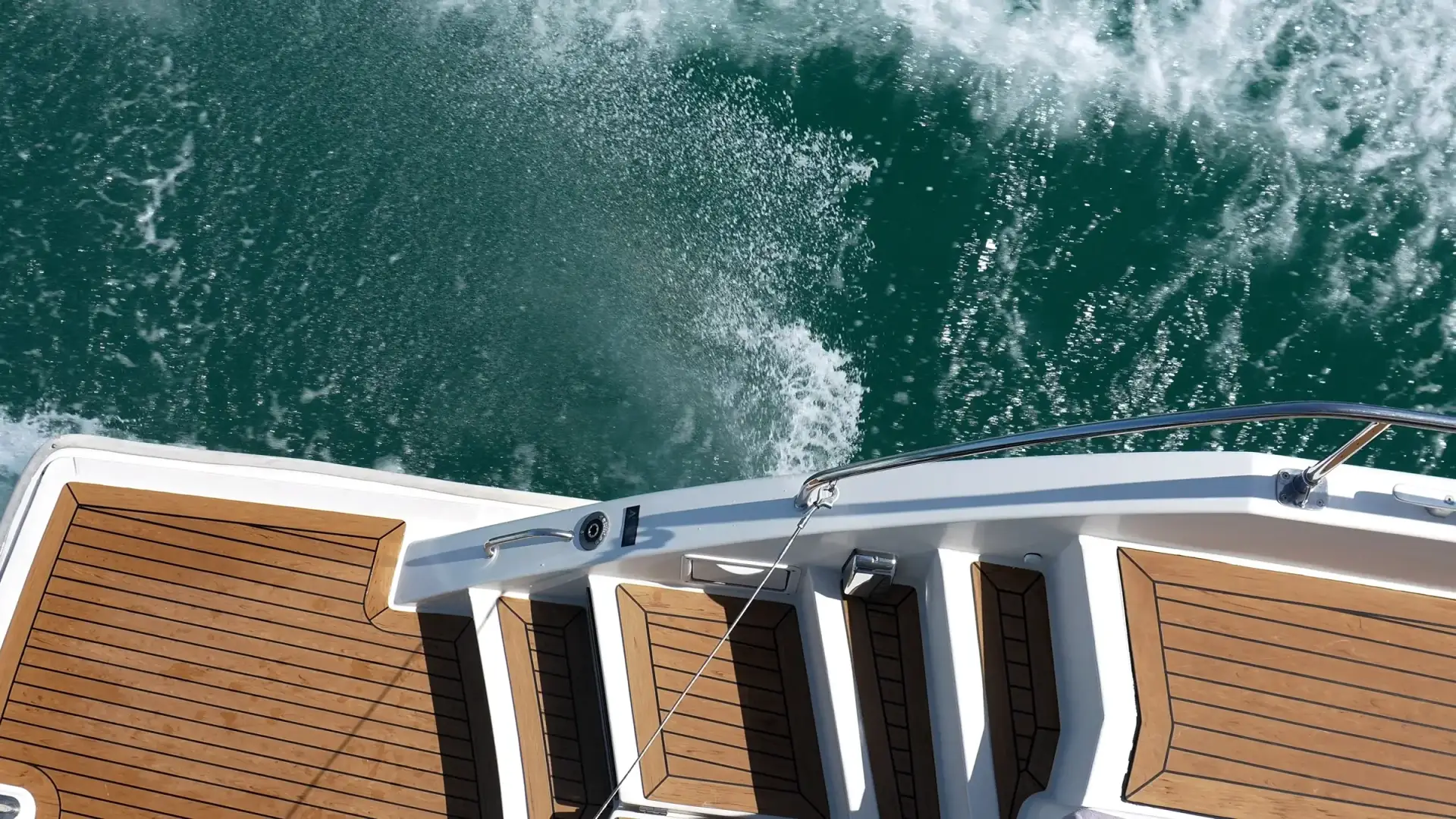
Stern deck and margin boards on a sailing yacht.
25+ years experience
2 workshops, including a 1,000 m² workshop
Australian owned and operated
+61 421 433 893
will@marxcraft.com.au
What does this deck need?
Four answers to one question.
A tired deck does not always need replacing. Equally, a fresh surface does not always solve what lies beneath it. Most teak work falls into one of four kinds. Different areas of the same vessel can need different answers.
Local repair
Often suits
A damaged plank, a lifted margin board or wear around a fitting, where the timber around it is still sound.
What we look at
Whether the surrounding timber, bond and substrate give the repair a clean boundary.
Re-seaming
Often suits
Seams that have cracked, shrunk or pulled away from the plank edges while the planks remain serviceable.
What we look at
The timber left beside each seam and whether the joints can be prepared to bond again. New caulking cannot fix movement underneath.
Sanding and restoration
Often suits
A deck that is sound and well bonded but worn, uneven or stained.
What we look at
Remaining thickness, earlier sanding, seam depth and the plugs and fastenings below the surface. Sanding removes timber that cannot be put back, so how much comes off follows the condition of the deck.
Replacement and new decks
Often suits
Widespread wear, lost adhesion, repeated leaks or timber too thin to restore. Also a new build, an extension or a refit that changes the deck itself.
What we look at
The substrate beneath, the run of planks and margins and every hatch, fitting and drain the deck must meet.
Silver-grey teak is simply weathered teak.
Colour alone is never a reason to replace it.
Reading the deck
We look beneath the surface before we recommend anything.
A neat seam does not prove a deck is well bonded. Water below can come from a hatch rather than the teak. These are the questions behind every recommendation we make.
The timber
Grain, soundness and remaining thickness. New teak will not match weathered timber straight away, so a repair respects the proportions and grain of the deck around it.
The seams
Whether the caulking has failed at the plank edge or within itself. Then, whether the joint faces can be prepared to bond again. Seam products are not interchangeable.
The bond
The bedding beneath the teak and the caulking between the planks do different jobs. A loose or hollow plank points to the bond, not the seam.
The substrate
Once an old deck is lifted, the surface beneath must be clean, dry, sound and suited to the bonding system. Concealed damage is agreed and treated before it is covered again.
The layout
Plank runs, margin boards, hatches, steps and drains are resolved together, so the deck reads as part of the vessel.
The fittings
Cleats, hatches, rails and penetrations are where water finds its way in. Their removal, sealing and reinstatement belong in the scope.
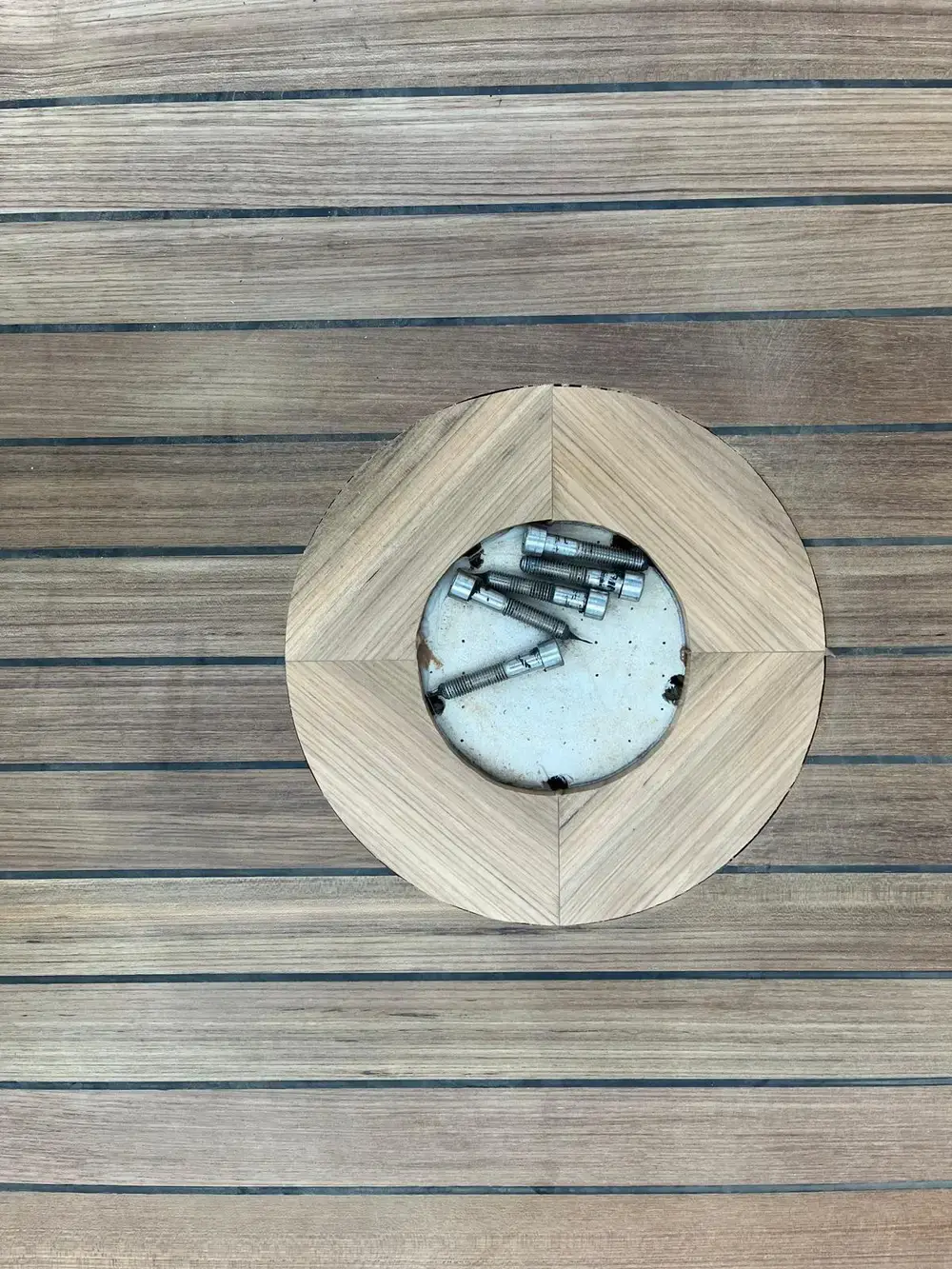
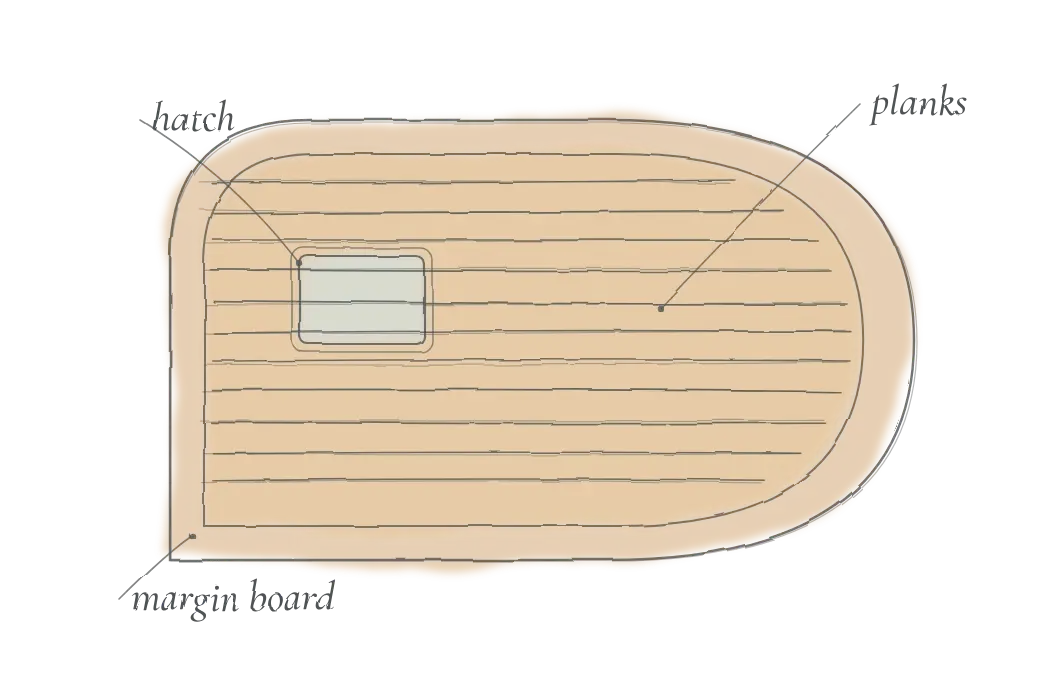
Plank field, seams and a shaped margin around a deck hatch.
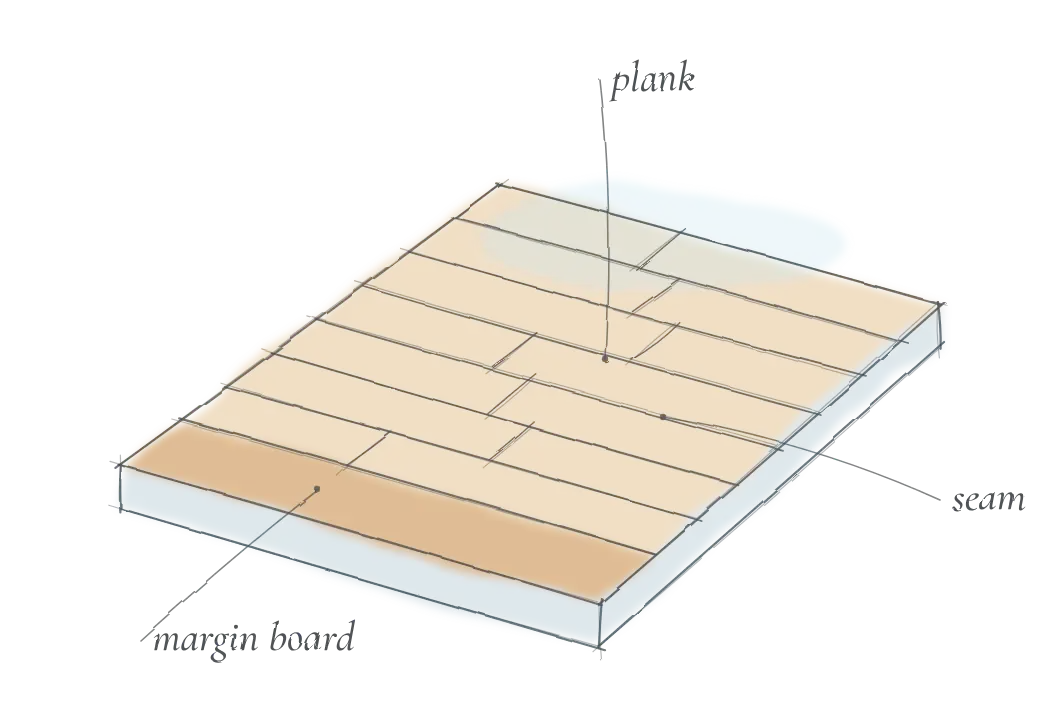
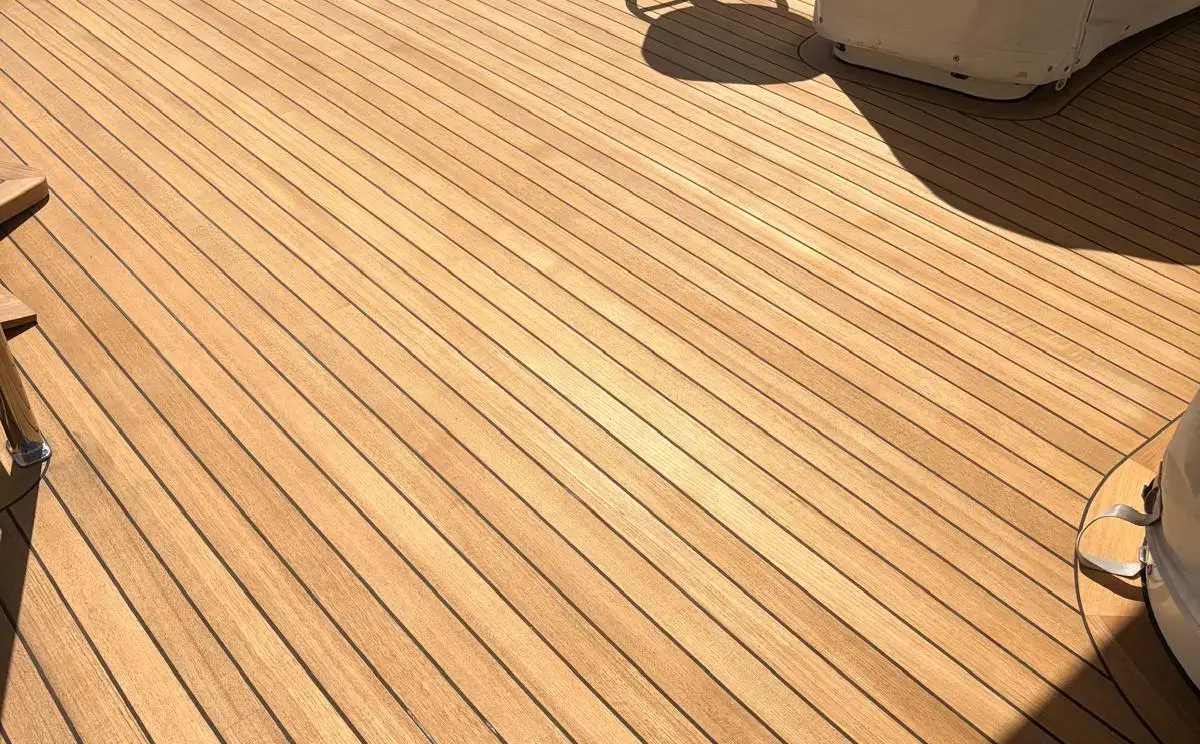
Plank, seam and margin board.
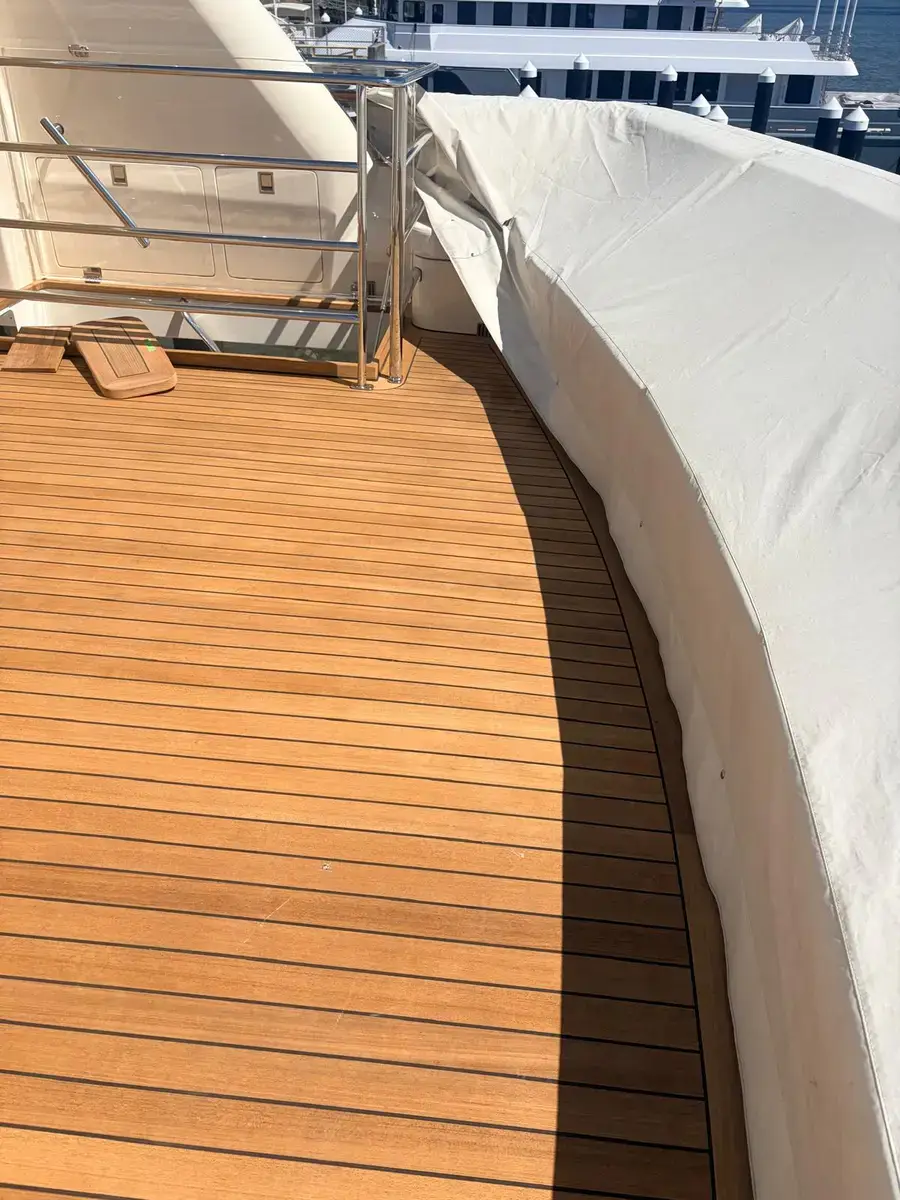
Curved margin boards following the bulwark.
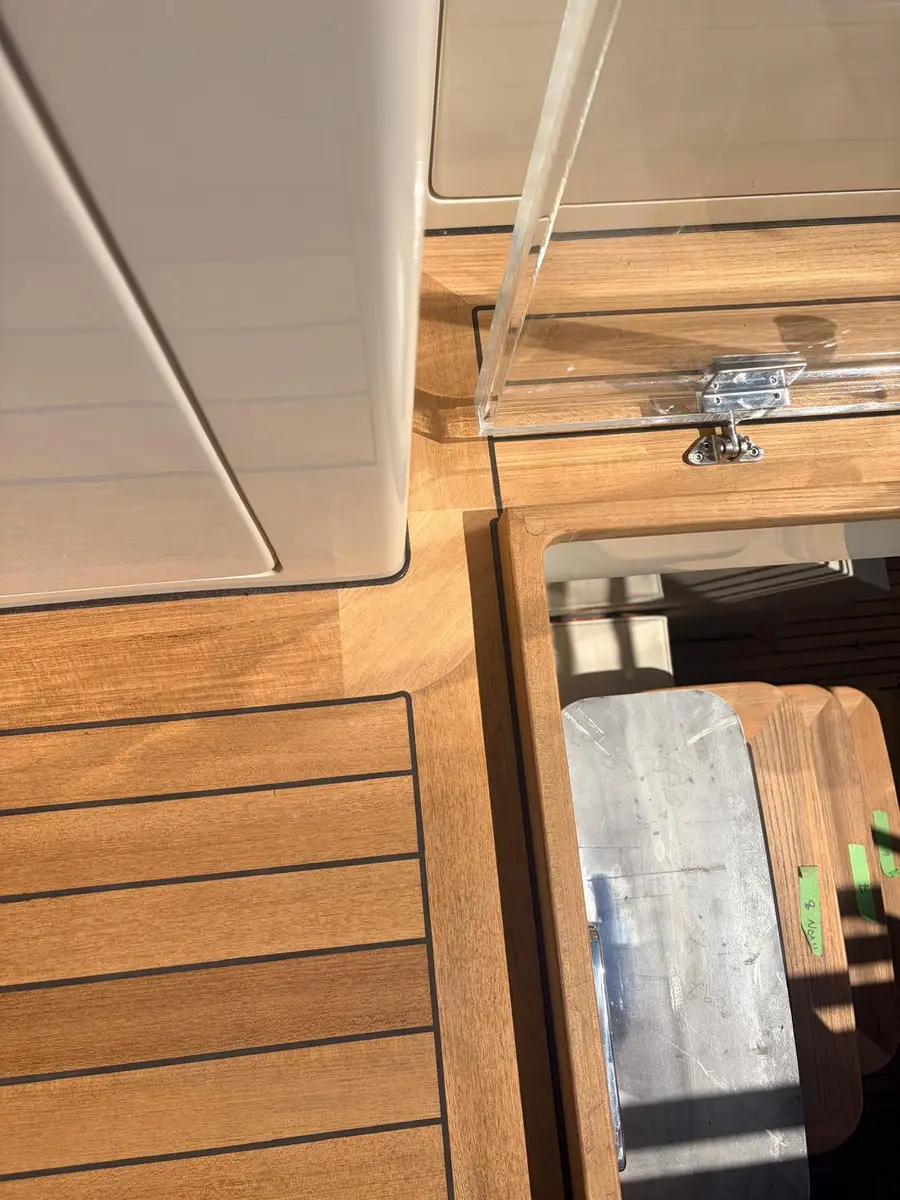
Margin boards meeting an open hatch.
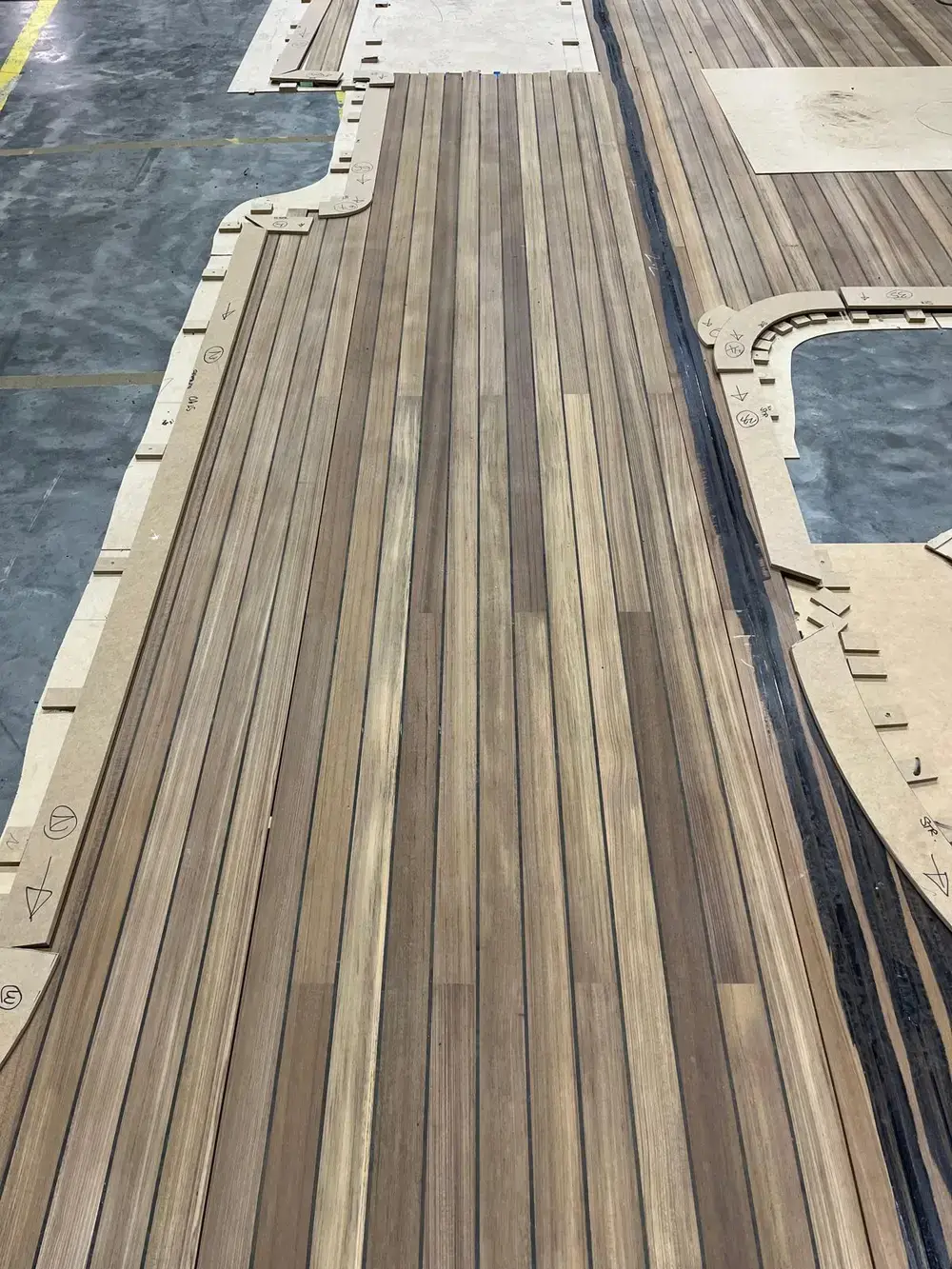
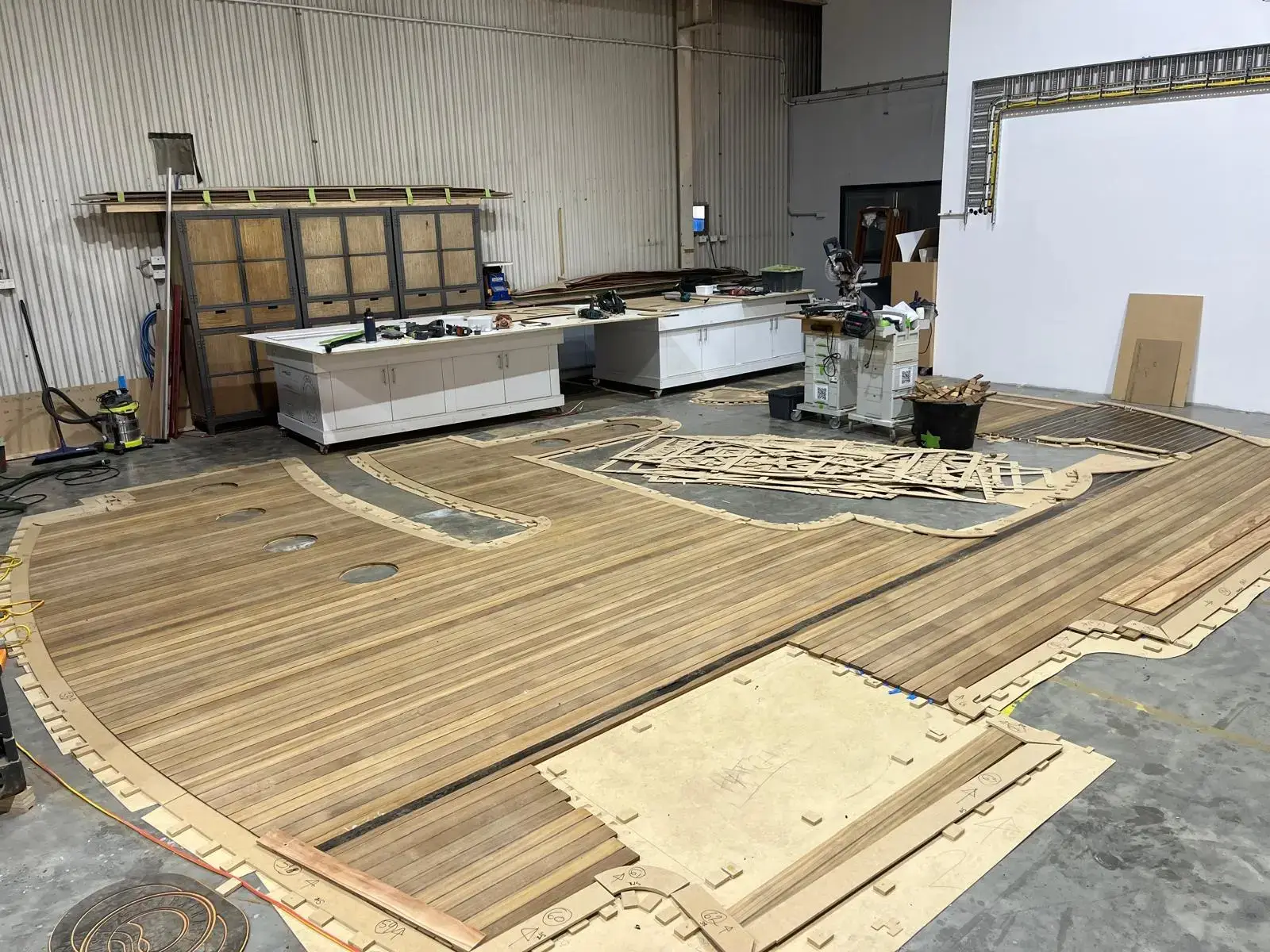
Planks and margin boards dry laid on templates in the workshop.
How the work is delivered
Measured on board, made in the workshop, finished on deck.
Most of the making happens in our 1,000 m² workshop at Hemmant. Templating and prefabrication there keep more of the work off the vessel and shorten its time in the yard.
01
Discuss
Tell us about the vessel, where it lies, the areas of concern and your timing. Photographs, drawings and earlier repair records all help.
02
Survey and define
We begin with a complimentary survey and consultation for vessels in Brisbane, Moreton Bay and the Gold Coast. For vessels further afield, travel is agreed individually. Some conditions only show once the old deck is lifted; we record them and agree the treatment before the work continues.
03
Template and make
Templates, 3D laser scanning and Rhino modelling capture the deck where they help. The planks, margin boards, steps and inlays are then machined, shaped and checked in our workshop, crated and sent to the vessel.
04
Lay, seam and finish
Our team prepares the substrate, bonds the deck, fills and cures the seams, then sands and finishes. Fittings and hardware are reinstated and care notes are handed over at completion.
Where the work happens depends on the vessel: our Hemmant workshop, our marina workshop and the enclosed hardstand at RQYS in Manly, aboard the vessel wherever it lies, or at a remote or international site.
Teak within a refit
One vessel, three kinds of teak work.
The same deck can need replacing in one place and careful repair in another. On Kokomo II, it needed both.

Kokomo II at sea.
Refit · Specialist scope
Kokomo II
Over four months, we refitted the crew mess and ensuite, the guest cabins, the owner's areas and windows, the bridge and the aft deck.
We also replaced the flybridge teak deck in full. More than 2,000 labour hours went into the scope.
On the aft deck, the work was re-seaming and local repair.
For the new deck, we machined, crated and supplied more than 650 lineal metres of teak planks and margin boards made for this vessel alone.
The refit was completed and handed over in 2026.
Engagement
Specialist scope
Teak
Flybridge deck replaced; aft deck re-seamed and repaired
Timber
650+ lineal metres of planks and margin boards
Completed
2026
Flybridge teak deck: planks and margin board.
Preserving a legacy
Mischief, 54 m Baglietto
Margin-board replacement and teak surrounds for the jacuzzi stage, part of more than 8,000 labour hours across the vessel.
Teak details within a refit
The workshop behind the deck
Timber chosen, machined and checked before it reaches the vessel.
650+ lineal metres
Teak planks and margin boards machined for Kokomo II
1,000 m²
Enclosed workshop in Hemmant
2 workshops
Hemmant and the RQYS marina at Manly
25
Australian tradespeople and apprentices
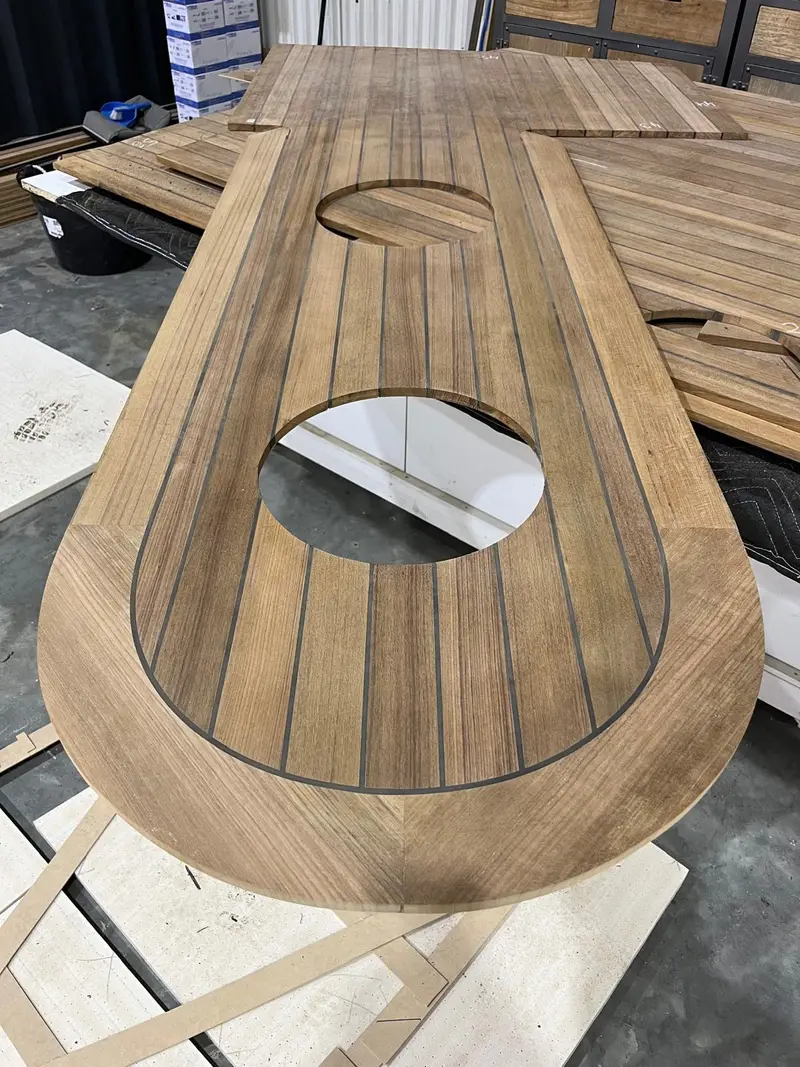
A shaped teak deck panel with its margin, laid out on the bench.
Design and technical
- Templating and 3D laser scanning
- Rhino modelling of plank and margin layouts
- Trial fits before timber is cut
Workshop and materials
- Two CNC routers
- Plank and margin-board machining
- Curved margins, steps and inlays
- Thicknessing and wide-belt sanding
Project management and delivery
- Access and programme planning
- Coordination with yards and other trades
- Crating and freight to the vessel
- Mobile installation teams
Quality and handover
- Inspection as the work proceeds
- Hidden conditions recorded and agreed
- Hardware and fittings reinstated
- Care notes at handover
Material choices
The timeless beauty of natural teak and contemporary alternatives.
Natural teak is the centre of our deck work. We also work with Flexiteek for owners who want a synthetic option. Whatever the surface, how it feels underfoot, how it is prepared and how it can be repaired matter as much as how it looks.
Our core offering
Natural teak
Natural grain and carefully resolved plank and margin details give each deck its own character. An existing teak deck can often be repaired, re-seamed or restored, depending on its condition. A new one is laid out to suit the vessel.
After handover, a planned maintenance programme keeps the deck in good order, typically every 18 to 24 months for decks in regular use, with the interval set by condition and use. Where a project calls for certified timber, such as FSC-certified teak, we source from suppliers whose stock carries that certification.
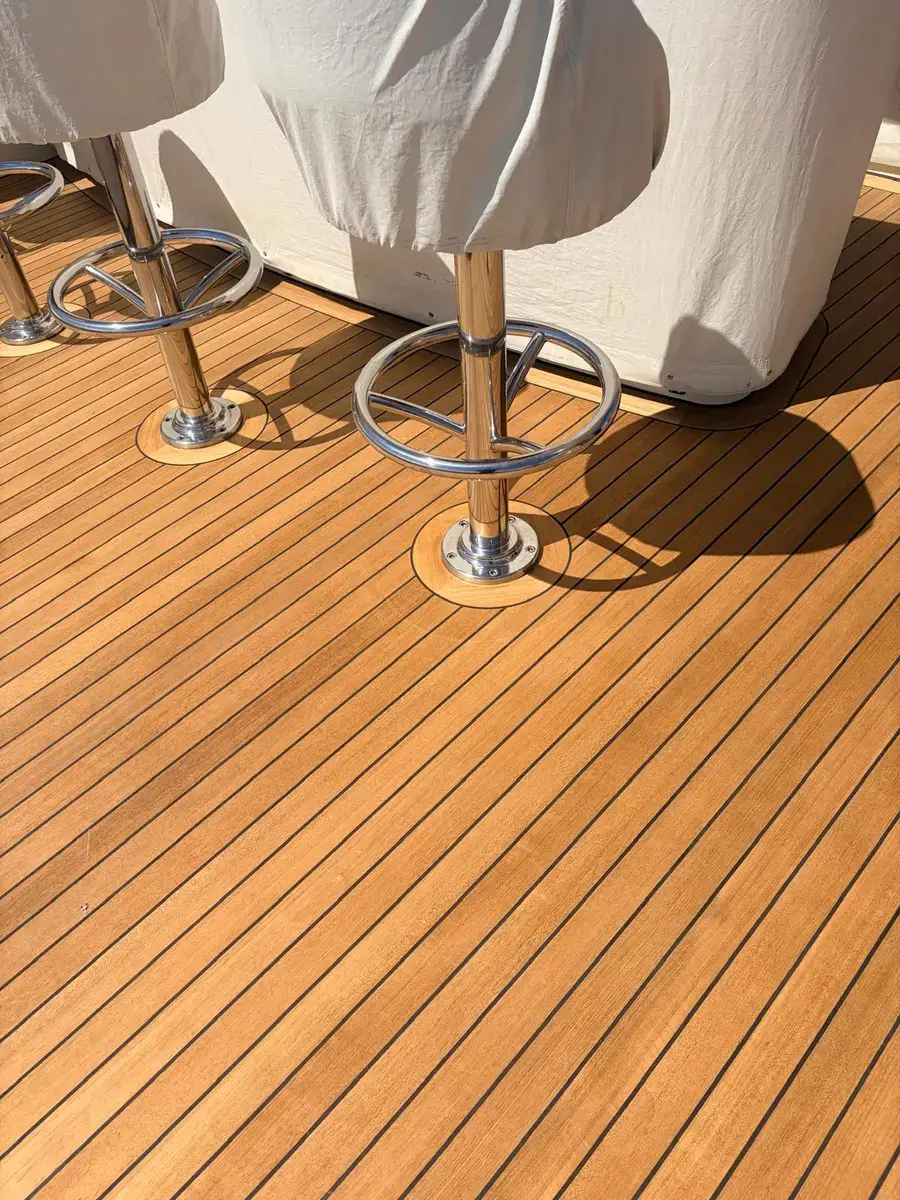
Plank field and inset margins around pedestal fittings.
Alternatives
Flexiteek
A synthetic teak system with timber-style colours and layouts. It has its own installation, cleaning and repair requirements. Its manufacturer advises against laying it over old teak, so the substrate is prepared for the new system.
The product generation matters when matching an existing deck or comparing published claims.
Permateek, welded PVC decking
Thermally welded panels in a range of grain effects and seam colours, bonded to a prepared surface. Its manufacturer describes soap-and-water cleaning and limited hand sanding; some damage calls for panel replacement and colour matching.
Esthec Nautical, thermoset composite
A non-PVC composite with standard and custom deck and seam colours. Its marine specification, repair method and local supply need confirming for the actual vessel.
SeaDek, closed-cell foam
Cushioned, adhesive-backed pads with textured and patterned finishes: a different category from teak or welded PVC. Its manufacturer warns that concentrated reflected sunlight can damage the foam. Its published warranty excludes installation and adhesion.
Manufacturer information reviewed September 2026. General guidance, not test results or a vessel-specific specification.
With more than 25 years in the industry, we offer a partial or full scope of works to suit your vessel. With a full scope, every stage sits within one seamless process: removal, substrate repair, fittings, templating, materials, bonding and curing. You have the peace of mind of knowing each step has been considered with care.
Planning your deck
A realistic programme
starts with the whole scope.
What shapes the cost and timing
- The area, the layout and the margins
- Removal of the old deck and any substrate repair
- Materials, adhesive and seam systems
- Access, weather protection and curing time
- Travel, freight and yard arrangements
- Other refit work on board
Bring what you already have
- The vessel's name or type and where it lies now
- Photographs, including close-ups of seams and fittings
- Drawings, earlier repair records or product details
- The areas you want to keep, repair or replace
- Your preferred work window
Where we work
Brisbane and Moreton Bay are our home waters, served from the Hemmant workshop and our marina workshop at RQYS, Manly. Work in wider South East Queensland, interstate and overseas is arranged individually, around access, inspection, freight and the vessel's own programme.
Questions owners ask
Before the work begins.
Useful starting points for an informed conversation about your deck.
Condition and treatment
Materials and care
Arranging the work
In other words
From those we have built with.
“Will Marx and his team have a passion for exacting standards in furniture making. This is shown in everything they produce.”
Richard Stanning, General Manager, McConaghy Boats
“Working with Marxcraft on the construction of the interior of Singularity confirmed to me that their team's level of skill, and commitment to quality, in both timber and composite work is second to none.”
Lorraine Murray, Director, ATL Composites Pty Ltd
“Because of Marxcraft's respect for the client's requirements and their ability to deliver the designated scope of supply on time and within budget, they will always be our preferred Interior fit out contractor.”
Peter Roberts, Project Manager, FMCA
“We feel that Marxcraft have executed the interior build in a fine manner and their attention to detail and commitment to the weight constraints throughout the construction of the furniture and linings has been handled extremely well and with full commitment.”
Mark Tucker, Managing Director, Design Unlimited
Find the detail that
matters to your vessel.
Marine
Yachts, superyachts and commercial vessels.
Yacht and superyacht refit
From a single cabin to a multi-zone programme.
Shipwright and marine services
Everyday care, repairs and haul-out work from RQYS.
Marine interior fit-out
Full or partial interiors for new builds.
Contact
Tell us about your deck.
Whether it is one lifting plank or a deck you are ready to renew, start with the vessel, where it lies and what you are seeing. Photographs help.
Hemmant headquarters
50 Barku Court
Hemmant QLD 4174
RQYS marina workshop
578 Royal Esplanade
Manly QLD 4179
Anywhere
Mobile teams for interstate, remote and international work